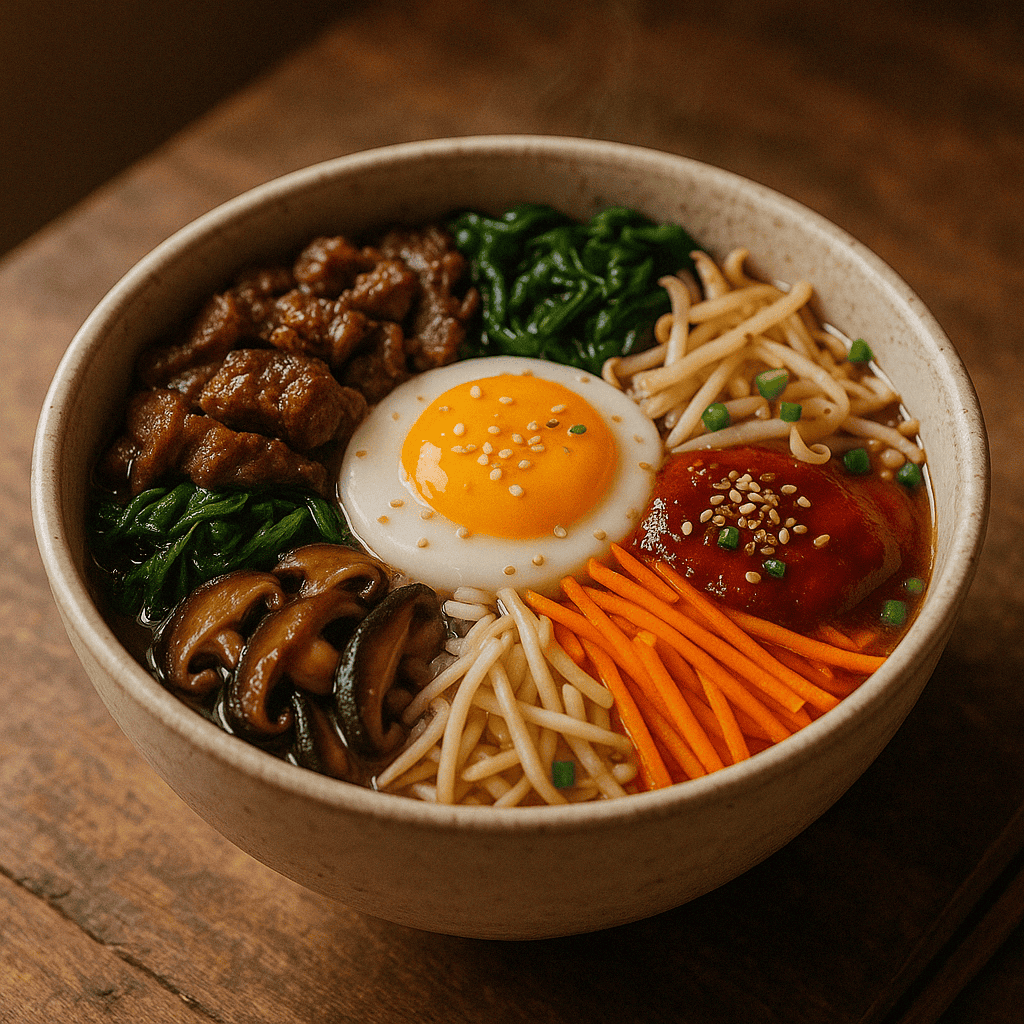
Bibimbap is a vibrant and colorful Korean dish, celebrated for its harmonious blend of textures and flavors. Originating from centuries-old practices of mixing leftover vegetables, meats, and rice, its name literally means “mixed rice.” Traditionally, this dish is a feast for the eyes and palate, featuring a beautiful arrangement of fresh vegetables, seasoned beef, a sunny-side-up egg, and a generous drizzle of spicy-sweet gochujang sauce. It represents balance and unity, making it a staple in Korean households and a symbol of the country’s culinary philosophy. When I first tried this in South Korea, the array of colors and aromas beckoned me in, offering a comforting and satisfying meal on a chilly Seoul evening.
Ingredients: A Rainbow of Flavors
- Short grain white rice – 2 cups / 400 g
- Ribeye steak, thinly sliced – 1/2 lb / 225 g
- Soy sauce – 3 tbsp / 45 ml
- Sesame oil – 2 tbsp / 30 ml
- Garlic, minced – 2 cloves
- Fresh spinach – 1 cup / 40 g
- Carrots, julienned – 1 cup / 100 g
- Bean sprouts – 1 cup / 100 g
- Shiitake mushrooms, sliced – 1 cup / 100 g
- Vegetable oil – 2 tbsp / 30 ml
- Eggs – 4
- Gochujang (Korean chili paste) – 4 tbsp / 80 g
- Sesame seeds – 1 tbsp / 9 g
- Scallions, thinly sliced – 2
Instructions: Crafting Your Korean Masterpiece
- Cook the rice according to the package instructions and keep warm.
- In a bowl, combine the sliced ribeye steak with 1 tablespoon of soy sauce, 1 tablespoon of sesame oil, and minced garlic. Marinate for 15 minutes.
- Blanch the spinach in boiling water for 1 minute, then rinse under cold water and squeeze out excess moisture.
- Sauté the carrots, bean sprouts, and shiitake mushrooms separately in vegetable oil, seasoning each with a bit of soy sauce.
- In a skillet, cook the marinated beef over medium-high heat until browned.
- In the same skillet, fry the eggs sunny side up to your desired doneness.
- Assemble each bowl by placing a portion of rice at the bottom. Arrange spinach, carrots, bean sprouts, mushrooms, and beef on top.
- Add a fried egg to each bowl. Top with a spoonful of gochujang, sesame seeds, and sliced scallions.
- Mix everything together before eating to ensure each bite is rich with all flavors.
Substitutions and Cultural Touchpoints
Whether for dietary needs or ingredient availability, Bibimbap is adaptable:
- Ribeye steak: Swap with tofu for a vegetarian option.
- Soy sauce: Substitute with tamari for a gluten-free version.
- Shiitake mushrooms: Use any mushrooms you have on hand.
Did you know Bibimbap was traditionally served in a communal bowl? To signify unity, families would gather around this dish and share, mixing everything together for a truly shared culinary experience.
Are you ready to dive into the world of Bibimbap? With a myriad of colors, flavors, and cultural history on your plate, each spoonful is a celebration. Moreover, it’s an excellent way to bring a taste of South Korea to your own dining table. Share this recipe with friends, and let’s keep the tradition alive one bowl at a time. Happy cooking!
Check out some of our other recipe books:
https://evolutionofflavour.com/cookbooks/balkan-cuisine/balkan-cuisine-volume-1/
https://evolutionofflavour.com/cookbooks/japanese-cuisine/japanese-cuisine-volume-1/
https://evolutionofflavour.com/cookbooks/italian-cuisine/italian-cuisine-volume-1/
https://evolutionofflavour.com/cookbooks/chinese-cuisine/chinese-cuisine-volume-1/
https://evolutionofflavour.com/cookbooks/oceanic-cuisine/oceanic-cuisine-volume-1/