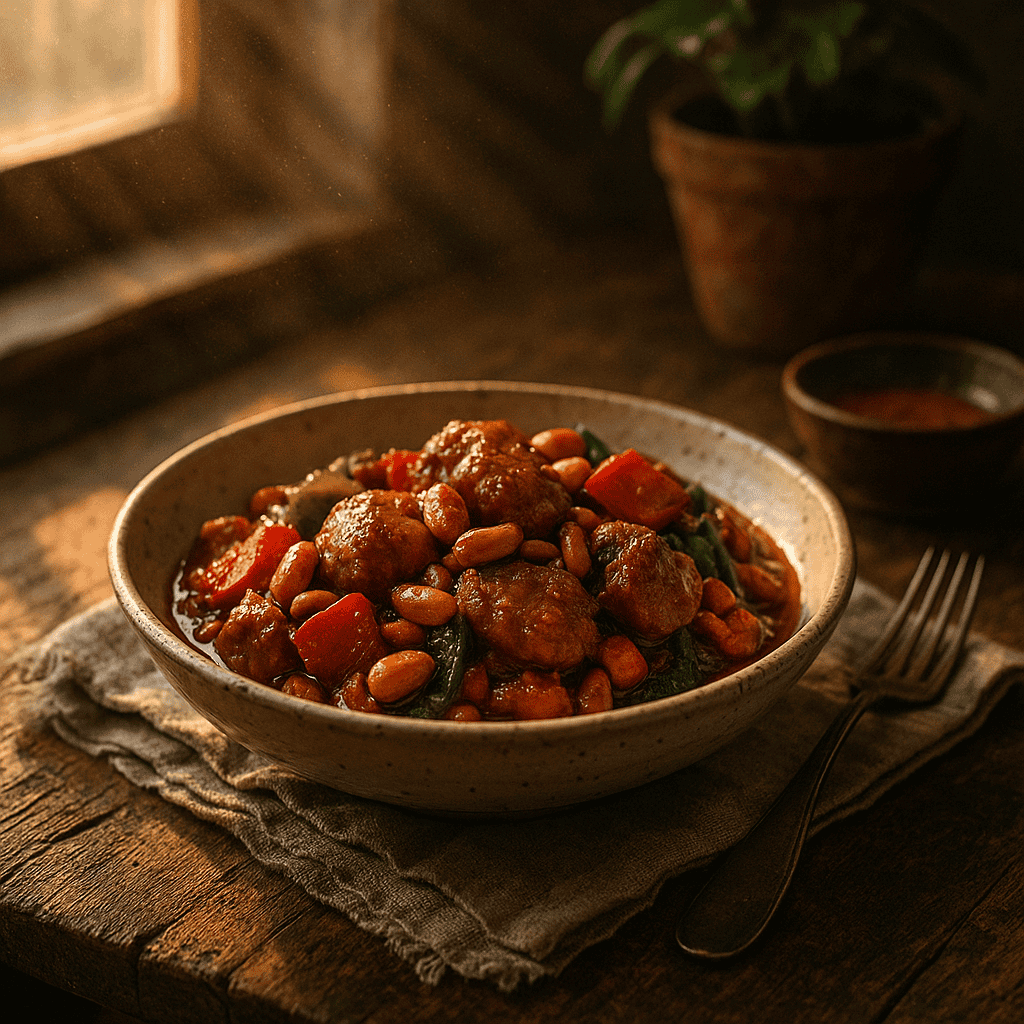
When I first tasted Kung Pao Chicken in the heart of Sichuan, China, I was instantly hooked. This classic dish, originating from Sichuan province, is celebrated for its bold flavors and intricate play of sweet, savory, and spicy elements. Traditionally, Kung Pao Chicken features tender chunks of chicken, peanuts, and dried chili peppers, all enveloped in a deliciously sticky and flavorful sauce. It’s a mesmerizing balance and depth typical of Sichuan cuisine, which has delighted palates worldwide with its symphony of tastes and textures.
Ingredients: The Heart of Authenticity
Before we embark on this culinary adventure, gather these essential ingredients:
- Chicken breast, diced – 1 lb / 450 g
- Soy sauce – 3 tbsp / 45 ml
- Cornstarch – 2 tbsp / 15 g
- Peanuts – 1/2 cup / 75 g
- Dried red chili peppers – 6 to 8 pieces
- Ginger, minced – 1 tbsp / 6 g
- Garlic, minced – 1 tbsp / 8 g
- Rice vinegar – 1 tbsp / 15 ml
- Hoisin sauce – 1 tbsp / 20 g
- Sesame oil – 1 tsp / 5 ml
- Scallions, sliced – 1/4 cup / 25 g
- Sichuan peppercorns – 1 tsp / 3 g
- Vegetable oil – 2 tbsp / 30 ml
Instructions: Creating Culinary Magic
- Marinate the chicken in 2 tablespoons of soy sauce and 1 tablespoon of cornstarch for at least 15 minutes.
- Heat vegetable oil in a wok over medium-high heat. Add peanuts and stir-fry until golden brown, then remove and set aside.
- In the same wok, add dried chili peppers and Sichuan peppercorns, stir-frying until aromatic.
- Add ginger and garlic, sautéing quickly before adding the marinated chicken. Stir-fry until chicken turns white.
- Add rice vinegar, hoisin sauce, remaining soy sauce, and sesame oil, stirring well to combine.
- Return peanuts to the wok, tossing everything until well coated with sauce.
- Garnish with sliced scallions and serve hot.
Possible Substitutions: Flexibility in Flavor
If you’re looking to tailor this dish to your dietary needs or pantry stock, here are some substitutions you can make:
- Use chicken thighs instead of chicken breast for a richer flavor.
- Swap tamari for soy sauce if you’re gluten-intolerant.
- Use oyster sauce in place of hoisin for a different depth.
Fun Cultural Fact
Did you know that Kung Pao Chicken is named after Ding Baozhen, a late Qing Dynasty official? Known as Ding Gongbao, or “Gongbao” (guard of the capital), his love for this dish secured its name and legacy. Many households in China proudly carry on this culinary tradition, making Kung Pao Chicken a cherished dish in Chinese culture.
So, are you ready to take your taste buds on an authentic Sichuan journey? Let this vibrant and flavorful Kung Pao Chicken transport you to the bustling streets of China, where each bite is a celebration of history and taste. Don’t forget to share your culinary triumphs with us in the comments below!
Check out some of our other recipe books:
Balkan Cuisine Volume 1
Japanese Cuisine Volume 1
Italian Cuisine Volume 1
Chinese Cuisine Volume 1
Oceanic Cuisine Volume 1