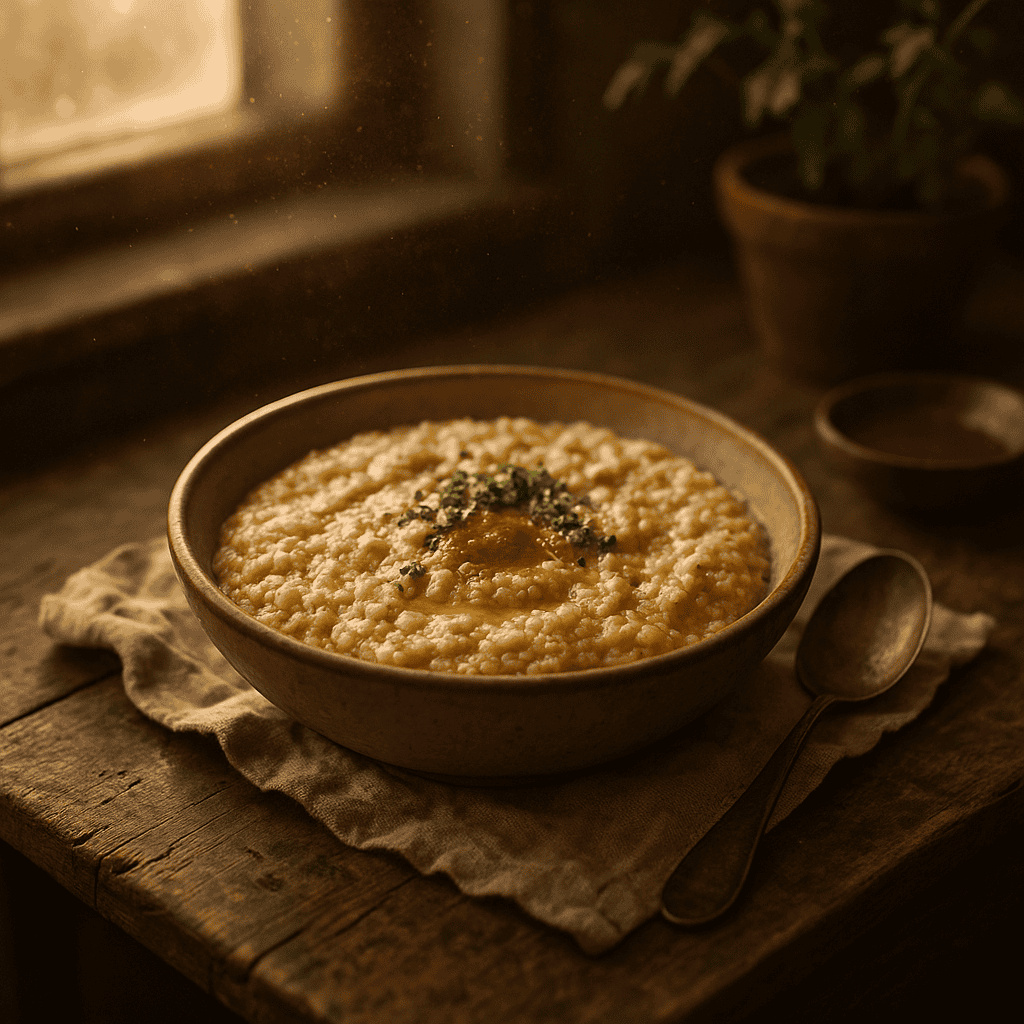
Jareesh is a comfort dish hailing from the culinary traditions of the Arabian Peninsula, particularly cherished in Saudi Arabian households. This deliciously hearty porridge-like dish is crafted from cracked wheat (freekeh) and is often cooked with flavorful spices and meat, providing a deeply satisfying and warming meal. Traditionally, Jareesh is served in communal settings, with families gathering around to savor its nurturing flavors, making it a symbol of hospitality and togetherness.
A Taste of Saudi Arabia
When I first tried this soul-soothing dish in Saudi Arabia, I was instantly transported to a rich tapestry of flavors and aromas. The warmth of the spices mingled with the creamy texture of freekeh, creating a meal that felt like a warm embrace. Each bite reminded me of the rich history and communal spirit that are central to Saudi Arabian culture.
Ingredients You’ll Need
- Freekeh (cracked wheat) – 2 cups / 320g
- Chicken broth – 4 cups / 960ml
- Chicken breast, diced – 300g / 10.5 oz
- Onion, finely chopped – 1 large
- Olive oil – 2 tbsp
- Ground cumin – 1 tsp
- Ground coriander – 1 tsp
- Salt – to taste
- Black pepper – to taste
- Lemon juice – 2 tbsp
- Fresh parsley, chopped – for garnish
Cooking Instructions
- Rinse and soak the freekeh in water for 30 minutes, then drain.
- In a large pot, heat olive oil over medium heat. Add chopped onions and sauté until translucent.
- Add diced chicken breast, cumin, coriander, salt, and pepper. Cook until the chicken is browned.
- Stir in the drained freekeh, coating it with the spices.
- Pour in the chicken broth, bring to a boil, then reduce heat to low and cover. Let it simmer for about 45 minutes or until the freekeh is tender and the mixture is creamy.
- Stir in lemon juice before serving.
- Garnish with fresh chopped parsley.
Recipe Flexibility
Whether you’re adapting this recipe to suit dietary needs or simply working with what’s available, there are some easy substitutions. Freekeh can be replaced with bulgur wheat, resulting in a slightly different texture. For those who prefer other proteins, lamb or beef can step in for the chicken breast, offering a richer taste. Finally, if you run out of olive oil, ghee or vegetable oil will do the trick.
A Fun Cultural Insight
Did you know Jareesh was historically a staple among Bedouin communities in the Arabian desert? Its easy preparation and nourishing properties made it perfect for sustenance during long travels. Today, it remains a beloved dish, reflecting the enduring hospitality and traditions of the region.
So, why not gather your loved ones and share a pot of heartwarming Arabian Jareesh? Prepare it in your kitchen, and experience the enduring warmth and togetherness that have accompanied this dish through centuries. Happy cooking!
Check out some of our other recipe books:
Balkan Cuisine Volume 1
Japanese Cuisine Volume 1
Italian Cuisine Volume 1
Chinese Cuisine Volume 1
Oceanic Cuisine Volume 1