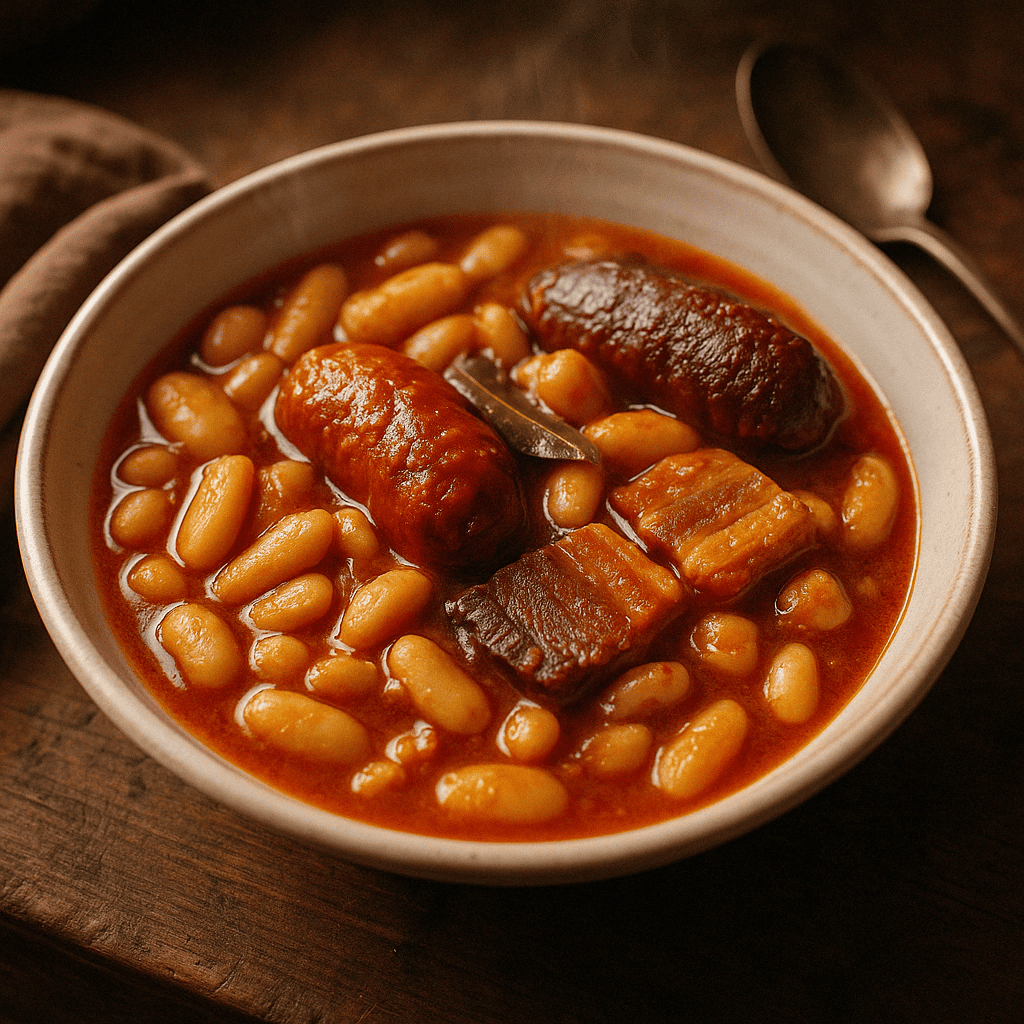
When you think of Spanish cuisine, vibrant tapas and rich paellas often come to mind. However, I recently had the pleasure of indulging in a hidden gem—Fabada Asturiana. A rich, hearty stew hailing from the Asturias region of northern Spain, this traditional dish is steeped in history. Particularly enjoyed during cold winter months, it’s a staple of Asturian cuisine. The star ingredient is the fabes, large white beans that absorb savory flavors from smoked meats and spices. With roots tracing back to peasantry cooking, fabada has evolved into an emblem of comfort and community nourishment.
Gather Your Ingredients for Fabada Asturiana
- 1 lb / 450 g dried fabada beans
- 2 links / 200 g chorizo sausage
- 2 links / 200 g morcilla (blood sausage)
- 200 g / 7 oz pancetta
- 1/4 tsp / 0.125 g saffron threads
- 2 bay leaves
- 1 large onion, peeled
- 4 whole garlic cloves
- 1 tsp / 2 g paprika
- 6 cups / 1.5 L water
- Salt, to taste
- 2 tbsp / 30 ml olive oil
Your Step-by-Step Guide to Culinary Artistry
- Rinse the dried fabada beans under cold water and soak them overnight in a large bowl filled with water.
- Drain and rinse the beans. In a large pot, add the beans, chorizo, morcilla, pancetta, bay leaves, onion, and garlic.
- Pour in the water and bring to a boil over medium-high heat. Skim off any foam that forms on the surface.
- Reduce the heat to low and simmer gently for about 2 to 3 hours, until the beans are tender.
- Add saffron threads, paprika, and salt to the pot. Stir gently and simmer for another 30 minutes.
- Remove the onion, garlic, and bay leaves before serving. Adjust seasoning as needed.
- Drizzle with olive oil before serving.
Substitute and Savor
Not everyone has access to authentic Spanish ingredients, but fear not! You can use black pudding in place of morcilla, or swap pancetta for bacon. Fabada beans might be difficult to find, but cannellini beans are a perfect substitute. Flexibility keeps this dish within reach while maintaining its soulful flavor.
Fun Fact to Savor
Did you know that in Asturias, Fabada Asturiana is traditionally served on San Antonio’s Day, the saint considered a protector of domestic animals? It’s a reminder of the region’s historical connection to agriculture and community celebrations.
So, food lovers, are you ready to bring a touch of Spanish warmth into your kitchen? This Traditional Fabada Asturiana promises comfort and a taste of history packed into every bite. Gather your ingredients, embrace the slow-cooking method, and let the aromatic scent of Fabada fill your home. Share your cooking experience and any personal twists on social media, and let’s keep this culinary tradition alive and thriving in modern kitchens!
Check out some of our other recipe books:
https://evolutionofflavour.com/cookbooks/balkan-cuisine/balkan-cuisine-volume-1/
https://evolutionofflavour.com/cookbooks/japanese-cuisine/japanese-cuisine-volume-1/
https://evolutionofflavour.com/cookbooks/italian-cuisine/italian-cuisine-volume-1/
https://evolutionofflavour.com/cookbooks/chinese-cuisine/chinese-cuisine-volume-1/
https://evolutionofflavour.com/cookbooks/oceanic-cuisine/oceanic-cuisine-volume-1/