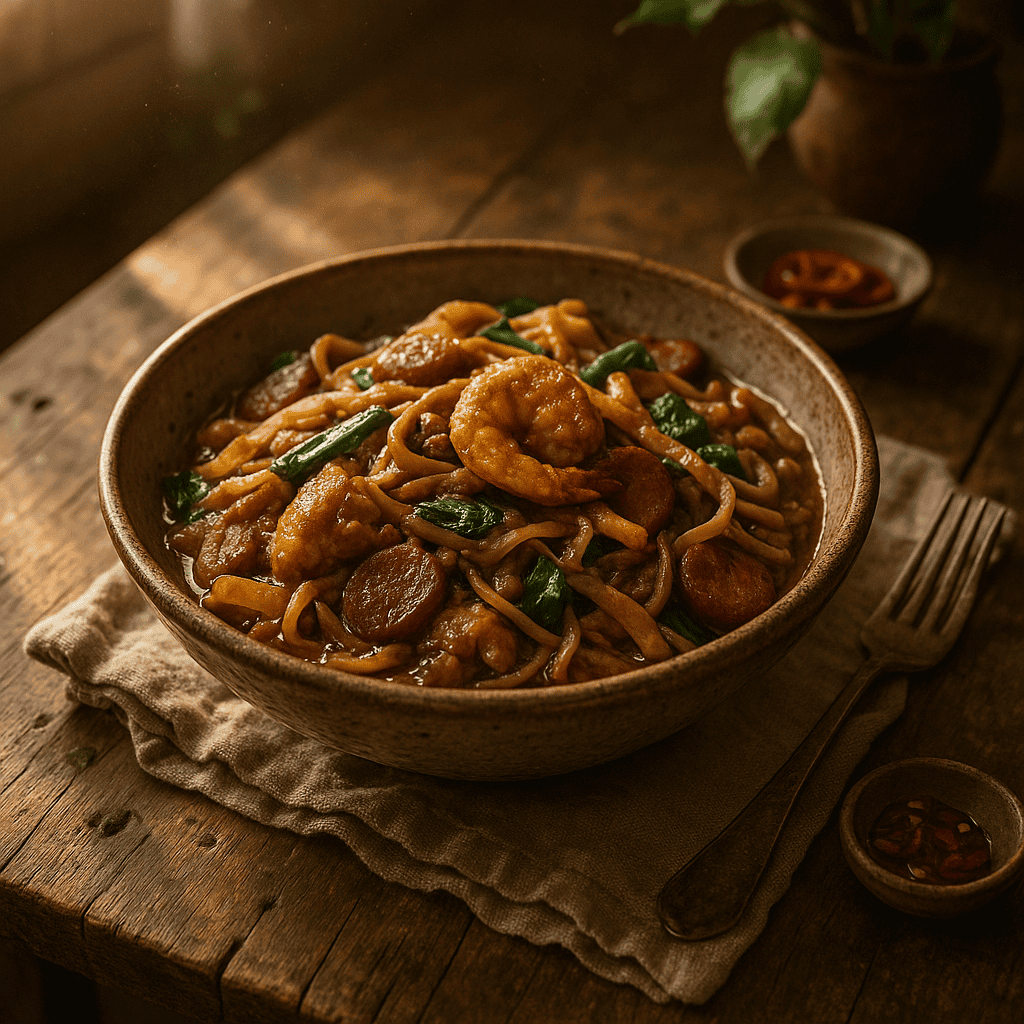
There’s something incredibly captivating about diving into a plate of Char Kway Teow. This beloved street food dish, a staple of Southeast Asia, especially in Malaysia and Singapore, epitomizes the dynamic flavors of the region. Traditionally stir-fried in a wok over high heat, this dish features flat rice noodles bursting with a savory and slightly smoky flavor, enhanced by crunchy bean sprouts, succulent prawns, Chinese sausage, and chives. Often seasoned with soy sauce, chili paste, and the distinct taste of wok hei (breath of the wok), Char Kway Teow is a celebration of bold, harmonious flavors.
A Dive into the Ingredients
- Flat rice noodles – 400 g / 14 oz
- Medium prawns, shelled and deveined – 200 g / 7 oz
- Chinese sausage, sliced – 100 g / 3.5 oz
- Bean sprouts – 200 g / 7 oz
- Garlic, minced – 2 cloves
- Chives, chopped – 1/2 cup / 50 g
- Dark soy sauce – 2 tbsp
- Light soy sauce – 1 tbsp
- Chili paste – 1 tbsp
- Eggs – 2
- Cooking oil – 3 tbsp
The Flavorful Journey: Step-by-step Instructions
- Soak the rice noodles in warm water until soft, then drain.
- Heat one tablespoon of oil in a wok over high heat and stir-fry the prawns until cooked, then set aside.
- Add another tablespoon of oil and sauté the garlic until fragrant.
- Add sliced Chinese sausage and stir-fry for a minute.
- Mix in the softened rice noodles, adding the dark soy sauce, light soy sauce, and chili paste, tossing to coat evenly.
- Push the noodles to one side, crack in the eggs, and lightly scramble before mixing with the noodles.
- Add the cooked prawns back into the wok along with the bean sprouts and chives, stirring well to combine everything.
- Serve hot, garnished with extra chives or a squeeze of lime if desired.
Flexible Substitutions for Any Preference
Navigating dietary preferences or pantry stipulations doesn’t have to mean sacrificing flavor. For those who’d prefer a twist:
- Swap Chinese sausage for bacon or a smoked sausage.
- Replace prawns with chicken or tofu for variations in taste or texture.
- Use regular soy sauce with a little molasses instead of dark soy sauce.
- Opt for Sriracha or crushed red pepper in place of chili paste.
A Taste of History: Char Kway Teow’s Vibrant Origins
It’s exhilarating to know that Char Kway Teow has humble beginnings among the food hawkers in Malaysia. It gained popularity due to its affordability and its unique fusion of flavors from both Chinese and Malay culinary traditions. The word ‘Char’ means stir-fried in Hokkien, and ‘Kway Teow’ refers to flat rice noodles—this dish’s star.
Savor the Symphony of Flavors
The first time I savored Char Kway Teow on a bustling street in Penang, Malaysia, the experience was nothing short of transformative. The medley of flavors dancing on my palate—the hint of smoky wok hei, the sweetness of Chinese sausage, and the juicy prawns—told a culinary tale I had never encountered before.
So, dear culinary explorers, it’s time to whisk yourselves away into a world of robust, aromatic flavors with Classic Street-Style Char Kway Teow. Prepare this delightful dish, and let your kitchen resonate with the sizzle of the wok and the aroma of Southeast Asia. Don’t forget to share your culinary creations and connect with a community of like-minded enthusiasts through comments or by tagging your dish on social media. Happy cooking!
Check out some of our other recipe books:
Balkan Cuisine Volume 1
Japanese Cuisine Volume 1
Italian Cuisine Volume 1
Chinese Cuisine Volume 1
Oceanic Cuisine Volume 1