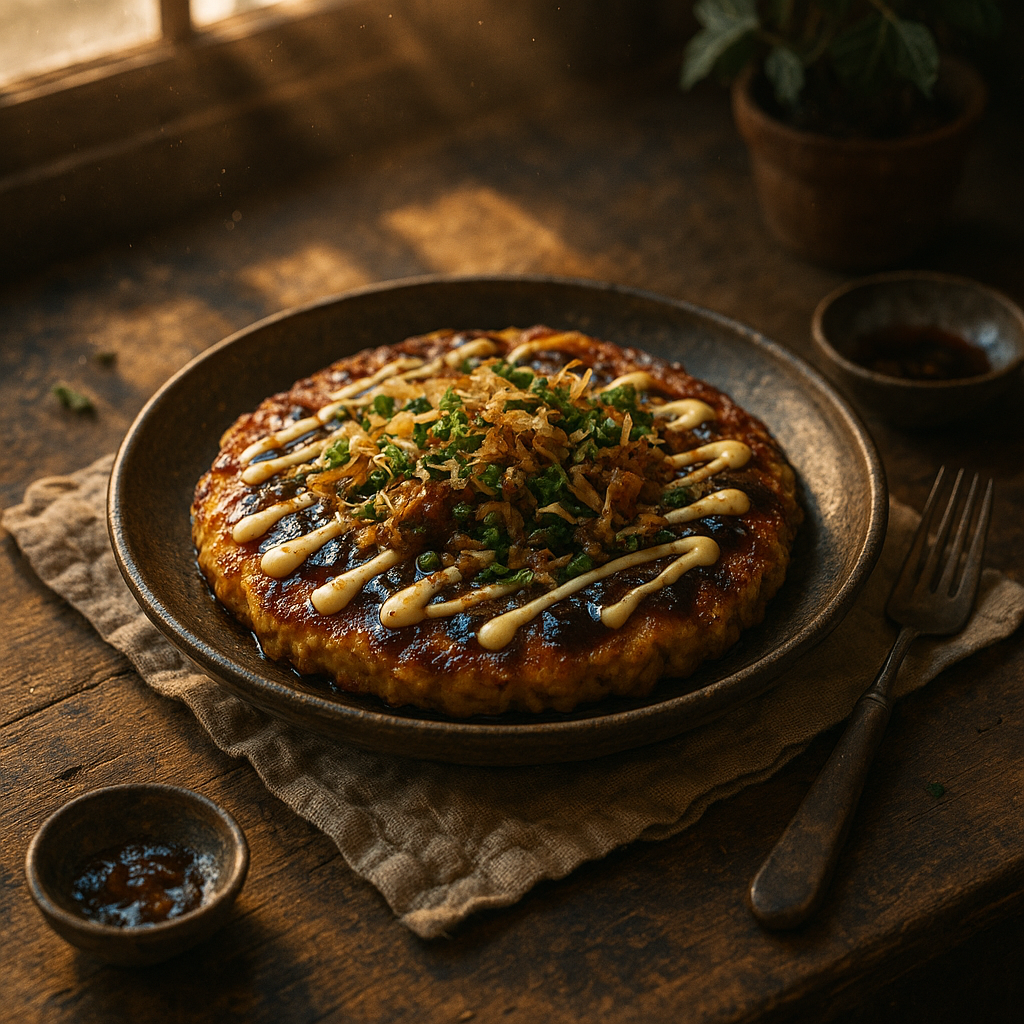
When you think of Japan’s culinary delights, the vibrant street food scene often comes to mind. Among these is the celebrated Okonomiyaki, often described as ‘Japanese pancakes’ or ‘Japanese pizza’. This savory dish embodies the essence of Japan’s street food culture. Originating in Osaka, Okonomiyaki is a tapestry of flavors—customizable layers of batter, cabbage, and delectable ingredients like shrimp and pork belly. Its name, ‘grilled as you like it’, highlights its versatility, allowing you to craft it to your liking.
Gather Your Ingredients: Embrace the Flavors of Japan
- All-purpose flour – 1 cup / 120 g
- Dashi stock – 3/4 cup / 180 ml
- Large eggs – 2
- Green cabbage, thinly shredded – 2 cups / 200 g
- Green onions, sliced – 4
- Fresh shrimp, diced – 150 g / 5 oz
- Pork belly slices – 150 g / 5 oz
- Okonomiyaki sauce – to taste
- Mayonnaise – to taste
- Aonori (dried seaweed powder) – 1 tablespoon
- Bonito flakes (katsuobushi) – 1/2 cup / 10 g
Master the Cooking Steps: Creating Your Okonomiyaki
- In a large bowl, mix the flour and dashi stock until smooth.
- Add eggs to the mixture and beat gently to incorporate.
- Fold the cabbage and green onions into the batter until well combined.
- Preheat a non-stick frying pan over medium heat and lightly oil.
- Pour a quarter of the batter into the pan, shaping it into a circle.
- Layer shrimp and pork belly slices on top.
- Cook for about 3-5 minutes on each side until golden brown and firm.
- Drizzle with okonomiyaki sauce and mayonnaise.
- Garnish with aonori and bonito flakes before serving.
Get Creative: Ingredient Substitutions and Customizations
Embracing the spirit of ‘grilled as you like it’, you can easily swap ingredients based on preference or availability. If you’re out of dashi stock, chicken broth is a suitable alternative. Moreover, bacon can replace pork belly, lending a smoky depth. Likewise, squid serves as a delightful substitute for shrimp.
Did you know? Okonomiyaki grew popular in Japan during World War II when rice was scarce. Its ability to incorporate various available ingredients made it a staple on dining tables across the country.
Now that you’ve discovered the secrets to crafting this delightful Japanese classic, it’s time to roll up your sleeves and turn your kitchen into an Osaka street stall. Invite family and friends, tantalize their taste buds, and share the joy of this traditional culinary art. Happy cooking!
Check out some of our other recipe books:
Balkan Cuisine Volume 1
Japanese Cuisine Volume 1
Italian Cuisine Volume 1
Chinese Cuisine Volume 1
Oceanic Cuisine Volume 1