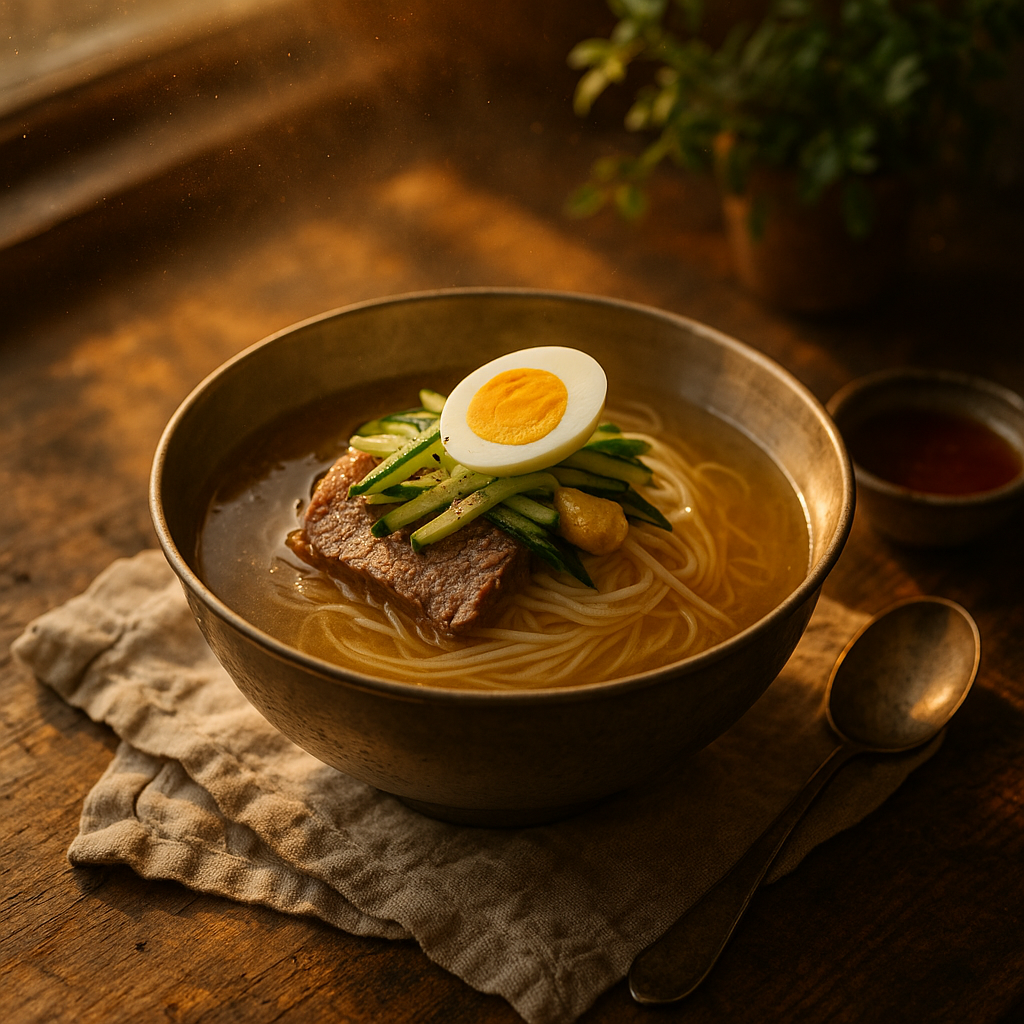
When I first tried Milmyeon in the vibrant port city of Busan, South Korea, I felt an instant connection to the culinary artistry of this region. Milmyeon, a beloved Korean noodle dish, originates from Busan. Translating to ‘wheat noodles’, this dish is a refreshing summertime staple characterized by its cold, chewy noodles and a savory, tangy beef broth. Rooted in Korean culinary tradition, Milmyeon offers both a striking balance of flavors and textures. It’s heralded for quenching the summer heat with its revitalizing coolness. Often compared to Naengmyeon, Milmyeon’s use of wheat flour provides a unique spin on a classic, making it approachable yet richly flavorful.
Ingredients You’ll Need
- wheat flour noodles – 12 oz / 340 g
- beef broth – 4 cups / 960 ml
- kimchi – 1 cup / 150 g, chopped
- cucumber – 1, julienned
- hard-boiled eggs – 2, halved
- sesame seeds – 2 tbsp
- soy sauce – 2 tbsp
- rice vinegar – 3 tbsp
- sugar – 1 tbsp
- chili powder – 1 tsp
- green onions – 2, chopped
Step-by-Step Instructions
- Cook the wheat flour noodles according to package instructions, then rinse under cold water to chill.
- In a large bowl, combine beef broth, soy sauce, rice vinegar, sugar, and chili powder. Stir well until the sugar dissolves.
- Chill the broth mixture in the refrigerator for at least 1 hour.
- Divide chilled noodles into bowls, pouring the cold broth over each serving.
- Top with kimchi, cucumber, half an egg, sesame seeds, and green onions.
- Serve immediately, ensuring all ingredients are cold for the best texture and flavor.
Possible Substitutions
If you’re inclined to experiment with this delightful dish, there are several substitution options to consider. Instead of beef broth, vegetable broth can be used for a vegetarian version. Additionally, rice noodles make an excellent gluten-free alternative to wheat flour noodles. Finally, for those looking to reduce refined sugars, honey can replace sugar with a lovely, subtle sweetness.
Fun Cultural Fact
Did you know that Milmyeon was actually created during the Korean War? At that time, wheat flour was more readily available than the traditional buckwheat used for Naengmyeon. This necessity sparked an innovative twist on a beloved classic, leading to the version we relish today. The dish represents resilience and adaptation in the face of hardship—a true testament to Korean culinary history!
This invigorating Korean Milmyeon delight is not just a meal; it is an experience to be savored and shared. Why not transport yourself to Busan’s bustling streets with this refreshing bowl of Milmyeon? I can assure you, it will bring a burst of culinary joy to your table. Dive in, explore the flavors, and let this dish become your new summer favorite!
Check out some of our other recipe books:
Balkan Cuisine Volume 1
Japanese Cuisine Volume 1
Italian Cuisine Volume 1
Chinese Cuisine Volume 1
Oceanic Cuisine Volume 1
Leave a Reply
You must be logged in to post a comment.