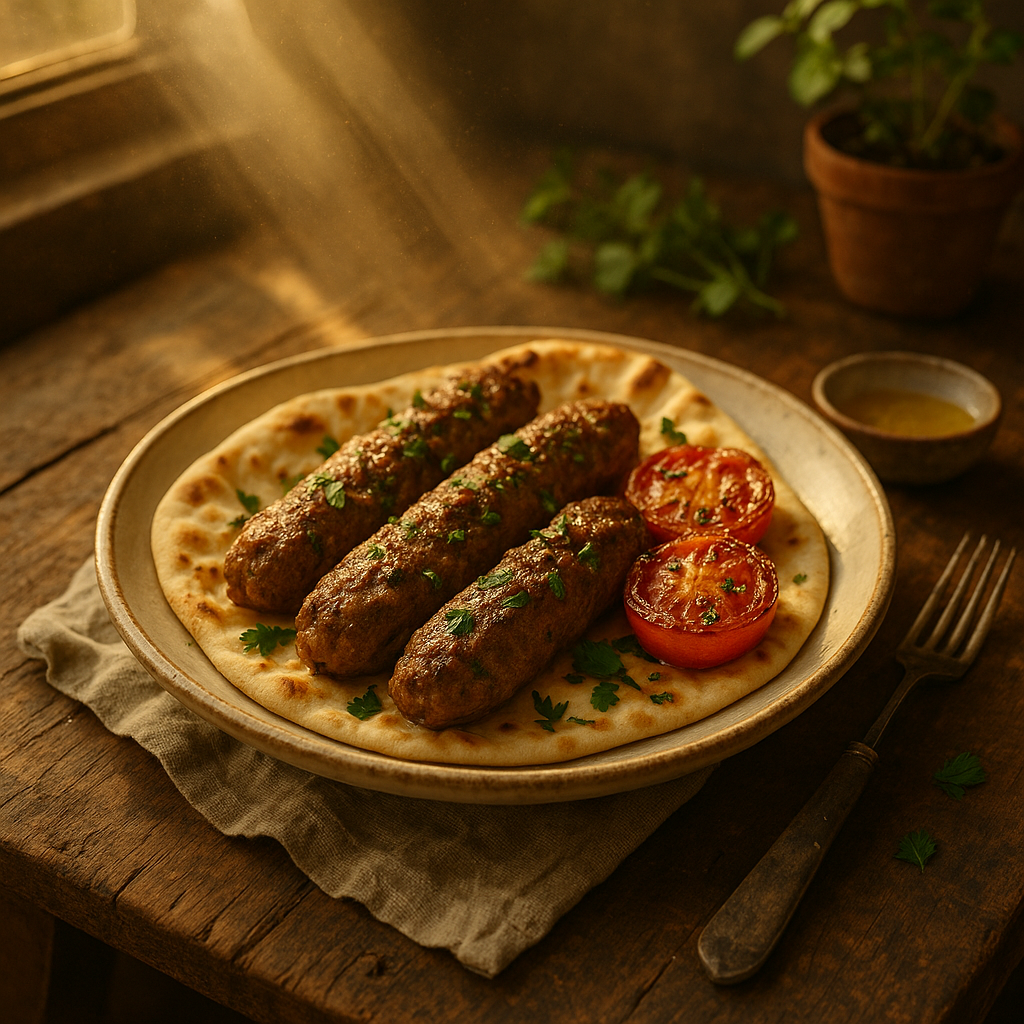
Persian Nan-e-Kabab Delight
When I first tried Nan-e-Kabab in the vibrant streets of Tehran, a symphony of flavors danced on my palate, instantly transporting me to the heart of Persian culinary tradition. Nan-e-Kabab is a delicious and aromatic Iranian dish that translates to “Bread and Kebab”. This authentic meal captures the essence of Persian cuisine, balancing fragrant spices with succulent grilled meat, typically served with soft, warm bread. The tradition of kebabs in Iran stretches back centuries, often enjoyed as a staple in Persian households and gatherings. This recipe strives to encapsulate the rich history and bold flavors that make this dish a favorite around the world.
Ingredients for Flavorful Nan-e-Kabab
- Ground beef or lamb – 500 g / 1.1 lbs
- Onion – 1 medium, grated
- Garlic – 2 cloves, minced
- Parsley – 1/4 cup / 15 g, chopped
- Turmeric powder – 1 tsp / 2 g
- Salt – 1 tsp / 5 g
- Black pepper – 1/2 tsp / 1 g
- Cumin powder – 1 tsp / 3 g
- Butter – 2 tbsp / 30 g
- Flatbread – 4 large pieces
- Tomatoes – 2, halved
Instructions for Creating This Delight
- In a mixing bowl, combine ground meat, grated onion, minced garlic, parsley, turmeric, salt, black pepper, and cumin.
- Knead the mixture well until everything is thoroughly combined.
- Divide the mixture into 4 equal portions; mold each into a long kebab shape.
- Heat a grill or frying pan over medium-high heat.
- Melt butter and brush it onto the frying pan or grill grates.
- Place kebabs on the grill and cook for about 10-12 minutes, turning occasionally, until browned and cooked through.
- Grill halved tomatoes alongside the kebabs until charred.
- Serve kebabs hot, wrapped in flatbread with charred tomatoes.
Variations and Substitutions
Whether you’re exploring new flavors or accommodating dietary preferences, here are some substitutions:
- Ground beef or lamb can be replaced with ground chicken or turkey for a lighter option.
- Flatbread is delicious, but pita bread offers a slightly different texture and flavor.
- For a dairy-free alternative, swap butter for olive oil without sacrificing richness.
Additionally, did you know that “kebab” comes from the Persian word “kabāb,” which means “fried meat”? This method of cooking has deeply influenced many Middle Eastern and Central Asian cuisines, making it a truly cross-cultural favorite.
Now that you have everything you need to create this Persian Nan-e-Kabab Delight, gather loved ones around, light up the grill, and let the enchanting scents of the spices captivate everyone’s senses. Share your experience in the comments below—I’m eager to hear how this delicious journey unfolds for you in your kitchen!
Check out some of our other recipe books:
Balkan Cuisine Volume 1
Japanese Cuisine Volume 1
Italian Cuisine Volume 1
Chinese Cuisine Volume 1
Oceanic Cuisine Volume 1
Leave a Reply
You must be logged in to post a comment.